
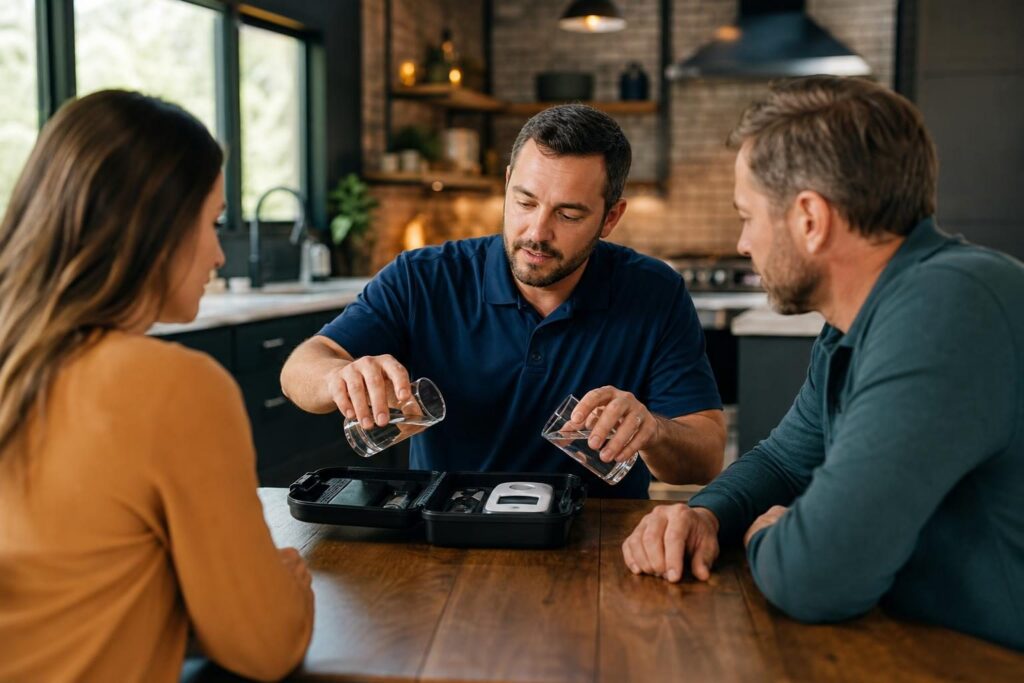
To hire good in-home water treatment reps, screen first for in-home sales experience, evening and weekend availability, and comfort with commission pay. Then watch each finalist run a demonstration before you make an offer. The demo is the sale, so a rep who can’t run it can’t close, no matter how well they interview.
Step 1: Define the job as it really works
Write down what a week looks like before you write the ad. Most water treatment closers work evenings and weekends because that is when homeowners are home. They test the water, run the demonstration, explain the options, and ask for the order at the table.
Note these points, because candidates will ask:
- Which days and hours they will be in homes
- How pay works: commission, draw, or a mix
- Whether you supply the appointments or they generate their own
- How far they will drive
If you are vague on any of these, good candidates will assume the worst and move on.
Step 2: Write an ad that filters
A good ad repeats what the job is, so the wrong people drop out before they apply. Say plainly that it is an in-home sales role, that it runs evenings and weekends, and that pay is commission-based. Describe the demo in a sentence or two so people picture the work.
Skip vague language like “unlimited earning potential” with nothing behind it. Give the real pay structure and what a solid rep earns on your team, if you can say it honestly. Experienced closers read ads for what is missing.
For more on where to post and how ads perform, see our comparison of Recruitomatic and posting on job boards yourself.
Step 3: Set knockout questions before anyone talks to you
Do not spend interview time on people who fail basic requirements. Ask a few yes-or-no and short-answer questions at the point of application:
- Have you sold in people’s homes before? What did you sell?
- Are you available evenings and weekends?
- Are you comfortable with commission-based pay?
- Do you have reliable transportation and a valid driver’s license?
In-home experience does not have to be water treatment. Reps from solar, windows, security, flooring, vacuums, and similar products already know how to sit in a stranger’s kitchen and hold a long conversation. Candidates who have only sold at a counter or on the phone can succeed, but expect a longer ramp.
Background checks, driver record checks, and any licensing or registration for door-to-door or in-home sales vary by state and sometimes by city. Check your local requirements before you set the screen.
Step 4: Make finalists run the demo
A conversation tells you how someone talks about selling. A demo tells you whether they can do it. Give finalists your demonstration outline a day or two ahead, then have them run it with you or your sales manager playing the homeowner.
Watch for these things:
- Control of the process. Do they guide the homeowner through each step, or just recite facts?
- Handling the numbers. Can they explain test results simply, without lecturing?
- Response to pushback. Play the spouse who says “we need to think about it.” See what happens next.
- The ask. Many weak reps run a decent demo and never ask for the order.
Do not expect polish. Look for someone coachable who takes a note and adjusts on the second pass.
Step 5: Put them in a ride-along before you commit
Have the finalist ride with your best closer on a real appointment. The candidate sees the work, and you see how they act around a customer. Some people realize on the drive home that evening work in strangers’ houses is not for them. That is a cheap lesson compared with a two-week onboarding.
Step 6: Fix the appointment flow before you hire more closers
Closers quit when they sit home with no booked water tests. Before you add reps, check that you have enough setters to feed them. Door, phone, and retail setters produce the appointments, and empty setter seats mean empty evenings for closers.
Hire setters on a steady schedule, not only when a closer complains. Screen them for the channel they will work and for availability during the hours people answer doors and phones. The same discipline applies to installers and service techs: ask about plumbing experience and tools, and check driving record, because the equipment ties into the home’s plumbing.
Step 7: Follow up fast, and keep following up
Strong candidates often have other offers or are still working. The company that responds first, confirms the interview, and reminds them has an edge. No-shows are common in sales hiring, so plan for several touches by text, email, and phone before and after the booking.
Recruitomatic does this for water treatment companies: we launch your campaign, screen each applicant with knockout questions on in-home experience, availability, and commission pay, and follow up until they book. You can read how it works on our process page, or see our water treatment recruiting page.
Step 8: Plan the first two weeks
New hires should not start by running solo appointments. A simple ramp looks like this:
- Learn the product and the water test
- Shadow a closer on several appointments
- Run the demo with the closer watching
- Run appointments alone, with a review the next morning
A sales manager who trains the demo and reviews every early appointment keeps reps from forming bad habits. If you do not have one yet, our guide on sales recruiting covers the broader hiring picture.
Frequently asked questions
Do water treatment sales reps need prior water treatment experience?
Usually not. In-home sales experience matters more, because the skills are running a presentation, handling objections, and closing at the table. Product knowledge can be