
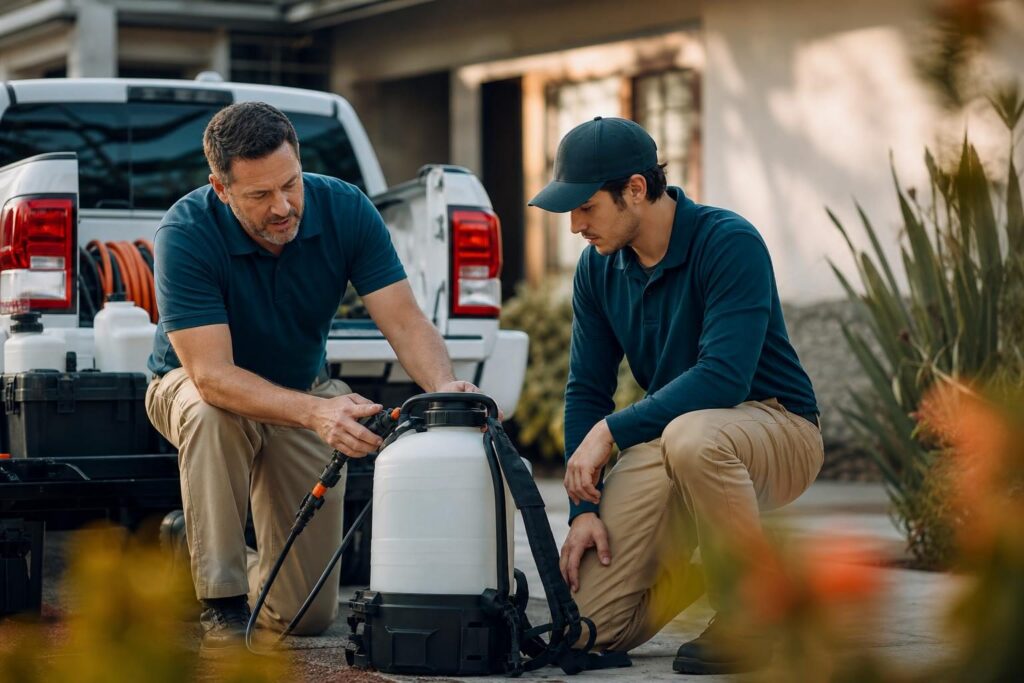
Start hiring service technicians earlier than feels necessary: at least a full training cycle before the day you need them running routes alone. A technician hired the week demand spikes is not a technician on a route that week. Plan from the solo-route date backward, and the timeline gets easier to manage.
Work backward from the solo-route date
Most owners set a hiring date based on when they feel the pain. A better anchor is the date a new tech needs to be treating homes without a trainer in the truck. Everything else counts back from there.
That date depends on your market. Spring ramps up in some regions and runs year-round in others. Look at last year: when did initial service requests start to back up, and when did your techs start working overtime? That is your real deadline, not the calendar start of summer.
A realistic timeline
These are planning stages, not guarantees. The lengths vary with your market, your state, and how fast you move. Replace the placeholders with your own numbers from past hires.
- Sourcing and applications. Ads run, applicants come in, and you see whether the pool is deep enough. Give this a couple of weeks before you judge it.
- Screening and interviews. Candidates who meet your requirements get scheduled. Slow follow-up costs you here, because good candidates take other offers.
- Offer, driving record check, and background check. Route techs drive company vehicles, so your insurer’s rules on driving records apply. Build in days for this, not hours.
- Licensing or registration. This is the longest and least predictable step. Many states require a license or certification to apply regulated products, and some allow trainees to work under a licensed applicator while they qualify. The rules vary by state, so confirm yours with the state agency that regulates pesticide applicators.
- Ride-alongs and training. New techs learn your products, your treatment standards, and your customer routine before they go out alone.
- First solo routes. A new tech starts with lighter routes while speed and quality build.
Add those stages up and the answer is usually longer than owners expect. The practical rule: if you need a tech solo by a given date, you should have started months before it, not weeks.
Where the delays hide
Licensing
If a candidate has to earn a state applicator license, the exam schedule and any required training can decide your timeline. Ask early in screening whether the candidate already holds a license or is willing to earn one, and know what your state allows a trainee to do in the meantime.
Driving records
A candidate who looks great in an interview but fails your driving record standard sets you back to the start. Ask about the license and record before the interview, not after the offer.
Notice periods and start dates
Experienced techs currently employed will often give notice. Plan for a gap between “yes” and the first day.
Candidate drop-off
No-shows and ghosted interviews eat calendar time. Every missed slot pushes the whole schedule back, so how fast you follow up matters as much as how many people apply.
Signs you are already late
- Your techs are working overtime most weeks, and quality or callbacks are slipping.
- Customers wait noticeably longer for the first service after signing up.
- Routes are getting longer and renewals are getting harder to protect.
- You are interviewing anyone with a pulse because the schedule is tight.
That last one is the most expensive. Rushing the hire to fill a gap usually leads to a quit within the first few months, and then you start over in the middle of the busy season.
Run technician and sales hiring on separate tracks
Technicians and door-to-door reps respond to different ads and different pay. A tech wants route stability, a clean truck, and steady pay. A rep wants commission upside and often relocation for the summer. Put both in one ad and you attract neither well.
The timelines differ too. Summer sales teams are recruited months ahead, and if you start late, the strongest reps have already signed elsewhere. Technician hiring runs on licensing and training time. Keep two pipelines with two calendars, and review them separately. Our pest control recruiting page covers how both tracks run.
Screen for the slow stuff first
The way to shorten the timeline is to remove the candidates who cannot meet the requirements before anyone spends time on an interview. For techs, that means a valid driver’s license, a clean driving record, and either a state applicator license or real willingness to earn one.