
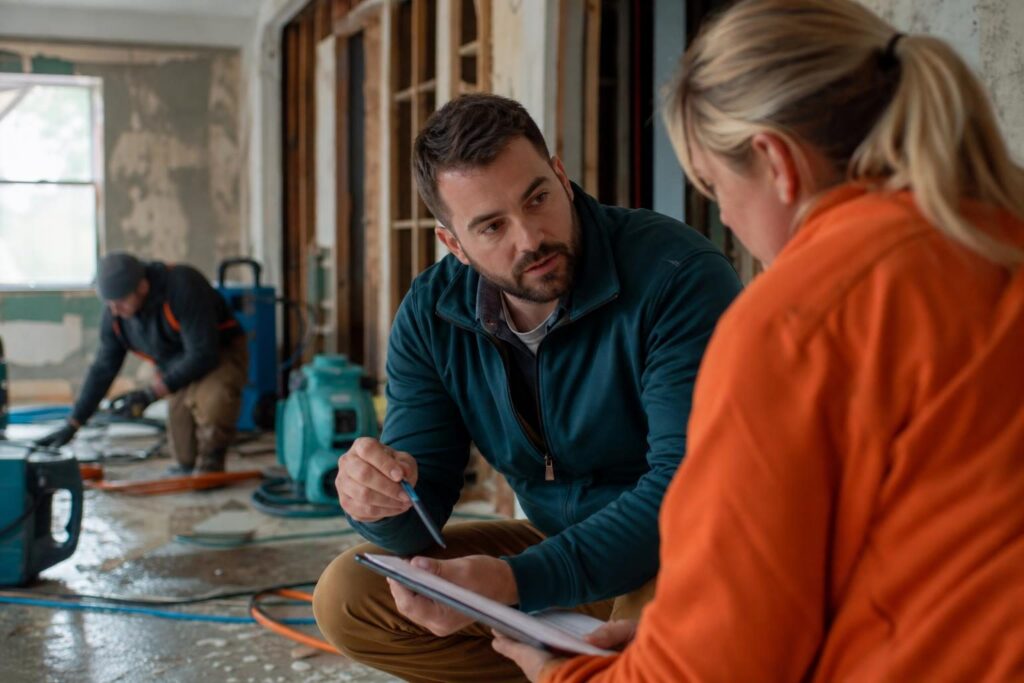
To hire a good restoration project manager, ask about real jobs they have run, not hypotheticals. Strong candidates describe a loss from first call to final invoice in specific detail: the drying, the paperwork, the adjuster conversations, and the handoff. Weak candidates stay general and credit “the team” for everything.
Screen before you interview
Interviews are for judgment. Basic fit should be settled before anyone sits down. For project managers, that means a few yes-or-no filters:
- Have they run insurance restoration jobs, not just general contracting or remodeling?
- Have they worked in estimating software such as Xactimate?
- Do they accept nights, weekends, and on-call rotations?
- Which certifications do they hold, such as IICRC credentials? Certification shortens ramp time, but requirements for licensing and certification vary by state, so check yours.
Put the on-call reality in the job ad and say it again on the first call. Losses don’t keep business hours, and stating that up front finds people who accept it. It saves you from hiring someone who quits the first time a pipe bursts on a Saturday.
Questions about running a job
“Walk me through the last water loss you managed, from the first call to the final invoice.”
A good answer follows a sequence without being prompted. It covers initial scoping, extraction, equipment placement, daily monitoring, reaching the dry standard, and the handoff to reconstruction if there was one. They mention who they talked to along the way: the homeowner, the adjuster, the techs. Listen for “I” where they actually made decisions. If they can’t say what the drying goal was or how they knew it was met, they probably watched the job rather than ran it.
“What do you check on a job you didn’t visit today?”
Good answers mention moisture readings, equipment logs, photos, and a call with the tech on site. They have a routine. Bad answers amount to “I trust my guys.”
Questions about insurance and estimating
“How have you used Xactimate on your jobs?”
A project manager doesn’t have to be the best estimator in the company, but they need to read an estimate and know when it’s wrong. Strong candidates talk about reviewing scopes, catching missing line items, and writing supplements when conditions change. If the answer is “the estimator handles that,” ask who catches the mistakes.
“An adjuster says you’ve kept equipment on site too long. What do you do?”
The best answer starts with documentation: daily moisture readings, drying logs, photos, and notes showing the materials weren’t dry yet. They stay calm, send the records, and ask what the adjuster is seeing. Be wary of two extremes: someone who folds immediately to keep the peace, and someone who treats every adjuster as an enemy. Both cost you money in different ways.
“What do you do to make sure a job gets paid correctly?”
Look for habits such as signed work authorizations before work starts, photos tied to each line item, and invoices that match the approved scope. They should be able to describe a time paperwork saved a disputed charge, or a time missing paperwork cost the company.
Questions about people under pressure
“It’s 2 a.m., a tech calls out, and a customer is waiting. What happens next?”
You want a real plan: who they call, what they’d do if no one picks up, and how they update the customer. A candidate who has done this before will have a backup list in their head. Check that they also describe telling the customer what’s happening instead of leaving them in the dark.
“Tell me about a homeowner who was upset about being displaced or about the mess.”
Restoration customers are often having the worst week of their year. Good project managers describe listening first, setting expectations about timing, and following up before the customer has to ask. Watch for blame. If every story has a villain, expect that in your office too.
“How do you hand off a job between mitigation and reconstruction?”
This is where jobs go sideways. Good answers include a walkthrough with the next crew, shared photos and notes, and a clear owner for each stage. If they have never worked a handoff, that tells you their experience is narrow.
Questions about numbers
“How do you know whether a job is making money while it’s still open?”
Strong candidates track labor hours, equipment days, and materials against the scope as they go. They may use the term WIP or just describe a weekly review. What matters is that they look at it before the job closes, not after.
Red flags worth noting
- They can’t name the software or process they used on past jobs.
- They describe jobs only in terms of what went wrong with others.
- They hesitate when you describe the on-call schedule.
- Their stories skip the documentation entirely.
Scorecards help