
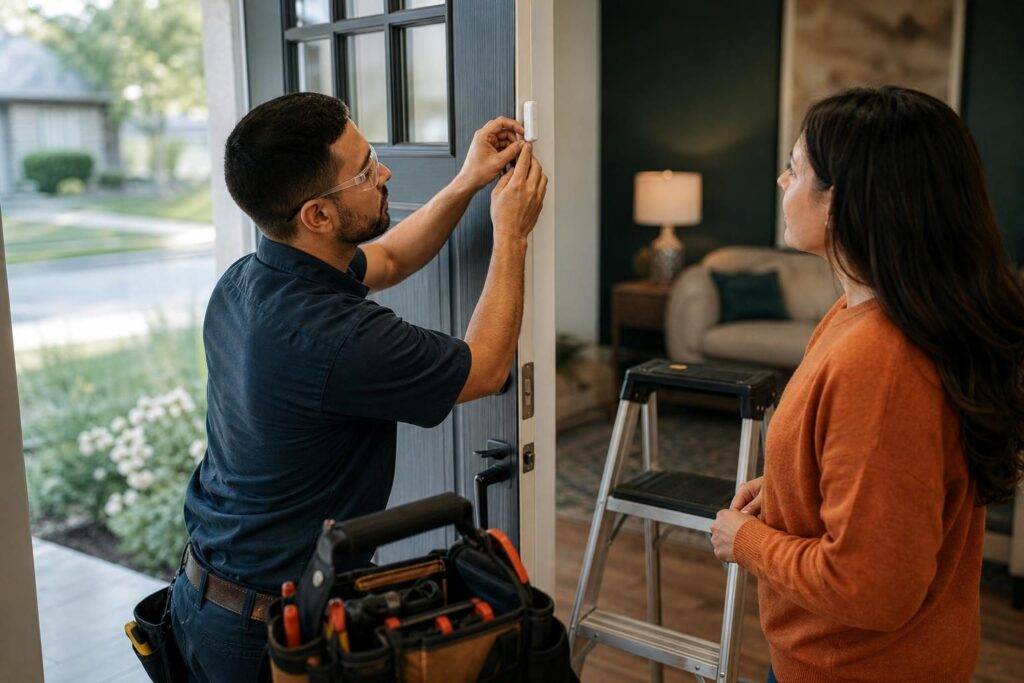
To hire install technicians who last, plan technician headcount at the same time as your sales headcount, confirm licensing and driving requirements before the first interview, and screen for low-voltage experience and tools up front. Most bad hires in home security come from a handful of avoidable mistakes. Here are the six we see most, with a fix for each.
Mistake 1: Hiring techs after the sales team is set
Sales and installs move together. A rep who closes a system at the door needs a technician within reach, often the same day. If you sign a full summer sales team and then start looking for installers, the first weeks of the season turn into a backlog of sold but uninstalled jobs.
The fix: Build one hiring plan that covers both roles in every market. For each territory, decide how many installs a tech can complete in a day, then work backward from your expected sales volume. Summer programs recruit early and teams get signed months ahead, so a late start leaves you with whoever is left.
Mistake 2: Treating licensing as an onboarding detail
Many states require alarm installers to be licensed or registered, and some require the same for sales reps. The rules, timelines, and who holds the license differ by state, and sometimes by city or county. Check your state and local requirements, and ask your attorney or licensing board if anything is unclear.
The mistake is learning about a gap after the offer is accepted. A new hire who cannot legally work for several weeks costs you payroll, patience, and often the candidate.
The fix: Put licensing in the job ad and ask about it in the first screening step. Know whether you will sponsor candidates under your company license or require them to arrive already credentialed, and say which in writing.
Mistake 3: Writing a vague ad
“Security installer wanted” attracts everyone from experienced low-voltage techs to people who have never held a drill. A vague ad produces a pile of applicants you have to sort by hand.
The fix: Be specific about the work and the conditions:
- What you install: alarm panels, cameras, smart locks, thermostats.
- Whether jobs are same-day installs following a sale.
- Pay structure, such as hourly, per-install, or a mix.
- Territory and drive time.
- Required credentials, vehicle, and tools.
The more specific you are, the more the wrong people filter themselves out.
Mistake 4: Screening on enthusiasm instead of requirements
A friendly candidate who interviews well can still be unable to run wire, work in an attic, or pass a driving check. Interview charm is a poor stand-in for the basics.
The fix: Decide your knockout requirements before you post, and test for them early. For install technicians, that usually means:
- Low-voltage experience: wiring, mounting, and basic troubleshooting. Decide whether you will train beginners or only take experienced techs.
- Driving record: techs spend the day in a vehicle, and your insurance carrier may have its own rules.
- Tools: what the candidate must own and what you provide.
- Background check readiness: candidates enter customers’ homes. Rules on what you can check and when vary by state, so confirm yours.
In the interview, ask for a real example: “Walk me through the last system you installed. What went wrong, and how did you fix it?” Someone who has done the work answers in detail. Someone who has not tends to stay general.
Mistake 5: Slow follow-up
Good technicians are rarely unemployed for long. If an applicant waits several days to hear back, they have usually taken another offer or stopped caring. No-shows are common too, especially when interviews are booked days out with no reminders.
The fix: Respond the same day, by text as well as email, and keep following up with people who go quiet. Confirm the interview the day before and again the morning of. If you cannot do this consistently while running installs, that is a process problem, not a candidate problem.
This is the part Recruitomatic handles for home security companies. Technician campaigns screen for low-voltage experience, driving record, and tools as people apply, and follow-up runs by text, email, and calls until candidates book or opt out. You can see the full flow on our how it works page, or read more about home security recruiting.
Mistake 6: Not showing the real job
Install work in peak season means long days, tight attics, crawl spaces, ladders, heat, and customers who expect a clean, friendly visit. Candidates who learn this on day three tend to leave by week three.
The fix: Describe a normal day plainly during the interview. Cover the hours, the physical demands, how same-day installs are scheduled, how pay works in a slow week versus a busy one, and what the first two weeks of training look like. Some candidates will walk away, which saves you the cost of a hire who was going to quit anyway. A ride-along or short paid trial day, where your state’s rules allow it, shows both sides what the job is.
A simple order of operations
- Set headcount for techs and sales together, by market.
- Confirm licensing and background-check rules for your states.
- Write the ad with the real job details and requirements.
- Screen on the knockouts before anyone reaches an interview.
- Follow up