
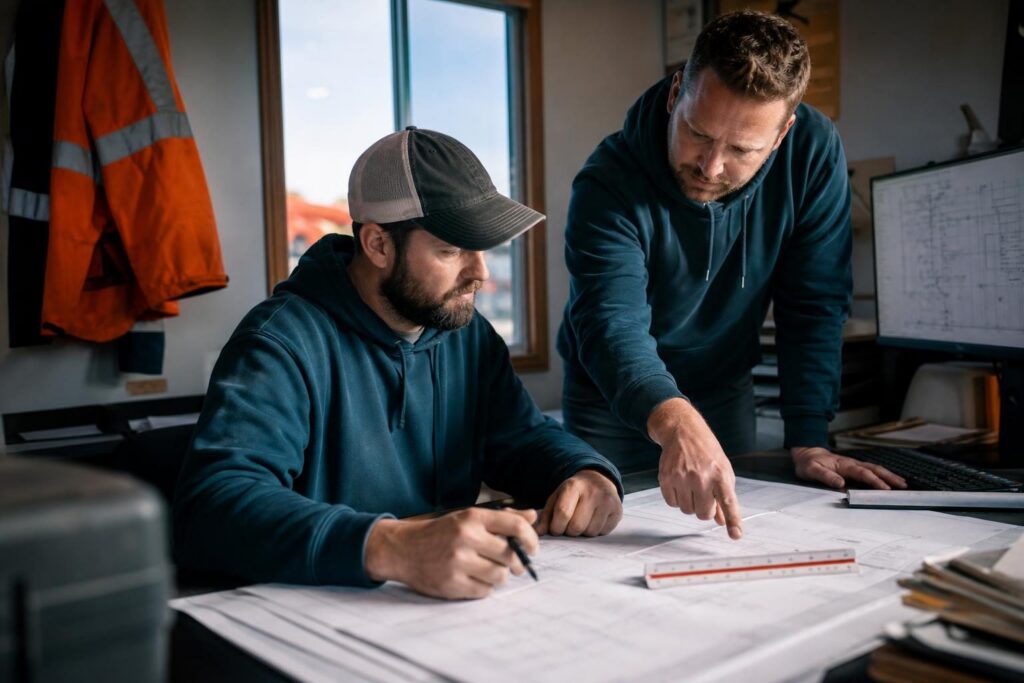
To hire an estimator, decide what kind of work they need to price, screen on trade, software, and project size before anyone gets an interview, then ask questions that make them walk through real bids. Strong estimators answer with specifics: quantities, scope gaps, sub quotes, and mistakes they have made. Weak ones fall back on “I’m very detail-oriented.”
Define the job before you write questions
“Estimator” covers a lot of ground. One company needs someone who does quantity takeoffs on drawings. Another needs someone who also collects sub bids, builds the number, and presents it to the owner. A third needs a person who also visits the site and sells the job.
Write down four things first: the trades and project types, the typical bid size, who sets markup, and whether the estimator hands the job to a project manager after award. Your questions only work if you know what a good answer looks like for your shop.
What to screen for before the interview
Estimators are rarely hired off a résumé alone, so use short knockout questions at the application stage. Candidates who miss the basics never reach your calendar.
- Years of estimating experience in your type of work (commercial, residential, civil, specialty trade).
- Takeoff and estimating software they have used, such as Bluebeam, PlanSwift, or On-Screen Takeoff, plus your estimating or project platform if it matters.
- Largest and typical project size they have priced.
- Field background, if you need it. Many of the best estimators came up as foremen or project engineers.
- Safety training, such as an OSHA 10 or OSHA 30 card, if the role includes site visits. Requirements vary by employer, project, and state.
- Licensing or certification, only where your state or your clients actually require it. Rules differ by state, so check yours.
Interview questions and what good answers sound like
Process
“Walk me through how you price a job from the day the plans arrive.” A good answer has a sequence: scope review, a check for missing or conflicting drawings, takeoff, sub and supplier quotes, labor and equipment, general conditions, markup, and a final review. Listen for whether they read specs and addenda or just measure drawings.
“How do you make sure you haven’t missed scope?” Strong candidates describe a checklist, a scope-gap review of sub bids, and questions sent to the architect or owner in writing. Weak candidates say they “double-check everything.”
Numbers and judgment
“Tell me about a bid you won and lost money on. What happened?” This is the best question on the list. A good estimator names the cause: a missed item, a labor assumption that was too optimistic, a material price that moved. They also say what they changed afterward. Be cautious of anyone who has never been wrong or who blames the field every time.
“How do you set labor productivity?” Look for references to historical job cost data, talking to foremen, and adjusting for site conditions like access, weather, or working around other trades. “I use the book rate” with no adjustment is a thin answer.
“How do you handle material price swings between bid and award?” Good answers include quote expiration dates, escalation clauses, supplier price holds, and how they flag risk to you instead of hiding it in a lump contingency.
Subs and communication
“How do you level sub bids?” A solid candidate explains comparing inclusions and exclusions line by line, calling subs to close gaps, and not defaulting to the lowest number. They should be able to say what a bad low bid looks like.
“What do you hand off to the project manager when we win?” You want someone who thinks past the bid: the scope narrative, assumptions, the sub list, a budget breakdown, and known risks. Estimators who treat award as the end of their job create friction later.
Fit and pace
“How many bids are you working at once, and how do you decide which to drop?” Good answers show prioritization based on fit, client, and margin, not just whichever is due first.
“What would you want to know about our past win and loss history?” Candidates who ask about hit rate, margin, and how bids are reviewed are thinking like estimators.
Add a short practical exercise
Conversation only goes so far. Give finalists a small, real-style task: a few plan sheets from a completed job, thirty to sixty minutes, and a request to list quantities, assumptions, and questions they would send to the design team. You are not grading for a perfect number. You are looking for what they notice, what they flag, and how clearly they explain their thinking.
Never use a live bid as a test. Use a finished job where you already know the answer.
Red flags
- They cannot explain how a past estimate was built, only that it was “approved.”
- They describe software but not the logic behind the numbers.
- They never ask about your project types, margins, or how bids are reviewed.
- Every loss was someone else’s fault.
- Their experience is in a different kind of work and they claim it transfers with no